
Articles | January 15, 2026
Our latest short quarterly insight for sponsors of group health plans focuses on musculoskeletal conditions and cost-management strategies.
It covers:
The insight also includes a compliance reminder to stay on top of 2026 reporting and disclosure requirements.
Typically, nearly one-third of participants in group health plans have a diagnosed musculoskeletal condition. Many of them do physical therapy, but a small percentage undergo surgery.
Musculoskeletal treatments account for nearly 15 percent of total medical expenditures. Although musculoskeletal-related costs are rising, they are increasing at a lower rate than overall medical trend.
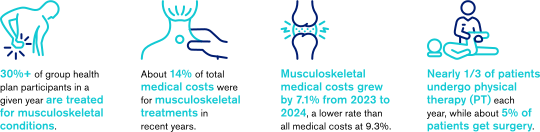
Source: SHAPE, Segal’s proprietary health data warehouse
Musculoskeletal care encompasses a broad range of conditions, from acute to lifelong. The Orthopaedic Research Society estimates that over half of adults in the United States have a musculoskeletal condition, including arthritis, low back pain, osteoporosis and gout, with an even higher disease burden among older adults. Musculoskeletal conditions are the leading cause of disability worldwide. Researchers anticipate a steep increase in the number of people living with musculoskeletal conditions in the coming years.
These broader trends place group health plans at high risk of seeing increased costs for musculoskeletal treatments in the future. Other environmental factors — including increased rates of obesity and other inflammatory conditions, sedentary lifestyles and occupational hazards in the building trades — increase the exposure for accident, disability and health plans.
Musculoskeletal conditions represent a wide range of health problems, including genetic deformities, injury and chronic diseases. Though some musculoskeletal disorders may eventually resolve, others can be debilitating and long term. PT is a common initial treatment, but for serious cases, advanced imaging and/or surgery may be necessary.
Although relatively rare, musculoskeletal surgeries are a common source of large claims, and pricing can be highly variable. In recent years, health plans have successfully shifted many procedures from inpatient hospitals to lower-cost outpatient and ambulatory surgery center (ASC) settings. Though this migration has helped to moderate cost trend, there are only so many procedures that can shift to ASCs and outpatient hospitals. Once a significant proportion of procedures has migrated, costs will likely begin to rise again. Additionally, the increasing pace of hospital consolidation in many local markets may erode the savings potential of migration.
Many common musculoskeletal procedures are considered low-value care, meaning they offer little to no clinical benefit, often at a high cost. Authorities such as Choosing Wisely and the British Medical Journal have identified several common treatments as being of low value, including imaging for low back pain, spinal injection and arthroscopy for degenerative knee disease. Other treatments, like opioids for acute pain, carry their own extreme health risks. Major surgeries can also have mixed success rates. Estimates of the failure rate of shoulder and spinal surgery run as high as 40 percent and 46 percent, respectively, while more common procedures, like hip and knee replacements, appear to deliver better results.
Digital health solutions offer a better alternative for musculoskeletal therapies and can also reach members at earlier stages. Many point solutions now exist, with interventions ranging from self-paced resources to guided virtual PT. A recent Segal analysis of one such program found that participants had fewer emergency room visits and lower cost trends than non-participants with similar conditions.
When properly implemented, virtual PT can help people restore functional status, prevent the overuse of painkillers and avoid further damage. Widespread access to PT can also improve the likelihood that future surgeries will be successful and may help avoid some procedures altogether.
Given the broad spectrum of musculoskeletal conditions and treatments, plan sponsors have a range of options for promoting quality while managing costs.
Key strategies include:
Depending on a plan’s demographics, geography and priorities, a hybrid approach will likely be the most successful.
As a new year begins, Segal can help ERISA plan sponsors stay on top of their reporting and disclosure requirements for health and retirement plans. Request your copy of Segal’s 2026 Reporting and Disclosure Guide for Benefit Plans.
Contact your Segal consultant or get in touch with us.

Health, Retirement, Compliance, Multiemployer Plans, Public Sector, Healthcare Industry, Higher Education, Architecture Engineering & Construction, Corporate, Pharmaceutical, ERISA@50

Health, Multiemployer Plans, Healthcare Industry, Public Sector, Higher Education, Architecture Engineering & Construction, Pharmaceutical, Corporate, Healthcare Cost Management

Health, Multiemployer Plans, Public Sector, Healthcare Industry, Higher Education, Architecture Engineering & Construction, Pharmaceutical, Corporate, Healthcare Cost Management
This page is for informational purposes only and does not constitute legal, tax or investment advice. You are encouraged to discuss the issues raised here with your legal, tax and other advisors before determining how the issues apply to your specific situations.
Don't miss out. Join 16,000 others who already get the latest insights from Segal.
© 2026 by The Segal Group, Inc.Terms & Conditions Privacy Policy Style Guide California Residents Sitemap Disclosure of Compensation Required Notices
