
A talented data analyst is weighing two job offers. One promises engaging work, supportive colleagues, flexibility and a meaningful mission. The other comes with higher pay and greater prestige.
Which is the better choice? There is no universal answer.

Higher pay may be especially important to someone saving to buy a home or struggling to pay off crushing student loans, while flexibility may matter more to someone who does their best thinking before or after traditional work hours or is juggling the needs of children or aging parents. Others may value greater autonomy or meaningful work more than either.
This combination of what employees value and what an organization offers is at the heart of its employee value proposition (EVP). An EVP encompasses the experiences, opportunities, benefits, rewards and other sources of value people gain from working for an organization.
At its core, an EVP answers two simple but important questions:
Employees form their own conclusions based on what they experience. Candidates do the same based on what they hear, see and encounter during the hiring process.
The opportunity for leaders is to understand what current and prospective employees value, determine what their organization can credibly offer and make deliberate choices about the employment experience they want to provide.
An EVP is sometimes treated as an employer branding exercise: develop a catchy phrase, feature it on the careers website and weave it into recruiting materials.
However, an EVP is more than a message. It is a promise: this is what it will be like to work here.
For that promise to be credible, it has to match what employees experience day to day. An organization may tout unlimited paid time off, but if managers quietly discourage employees from using it, flexibility is not truly part of its EVP. Similarly, an organization that promises opportunities for career growth but routinely fills vacancies with external candidates will quickly lose credibility with employees.
The most effective EVPs sit at the intersection of three elements:
What an organization chooses to emphasize will depend on what it can offer and the kinds of people it wants to attract. An organization that attracts people through a strong sense of mission may emphasize purpose and meaningful work rather than market-leading pay. By contrast, an organization that expects employees to work at a consistently intense pace may need to offer greater financial rewards to make that tradeoff worthwhile.
While every organization’s EVP will look somewhat different, several dimensions commonly shape the employee experience:
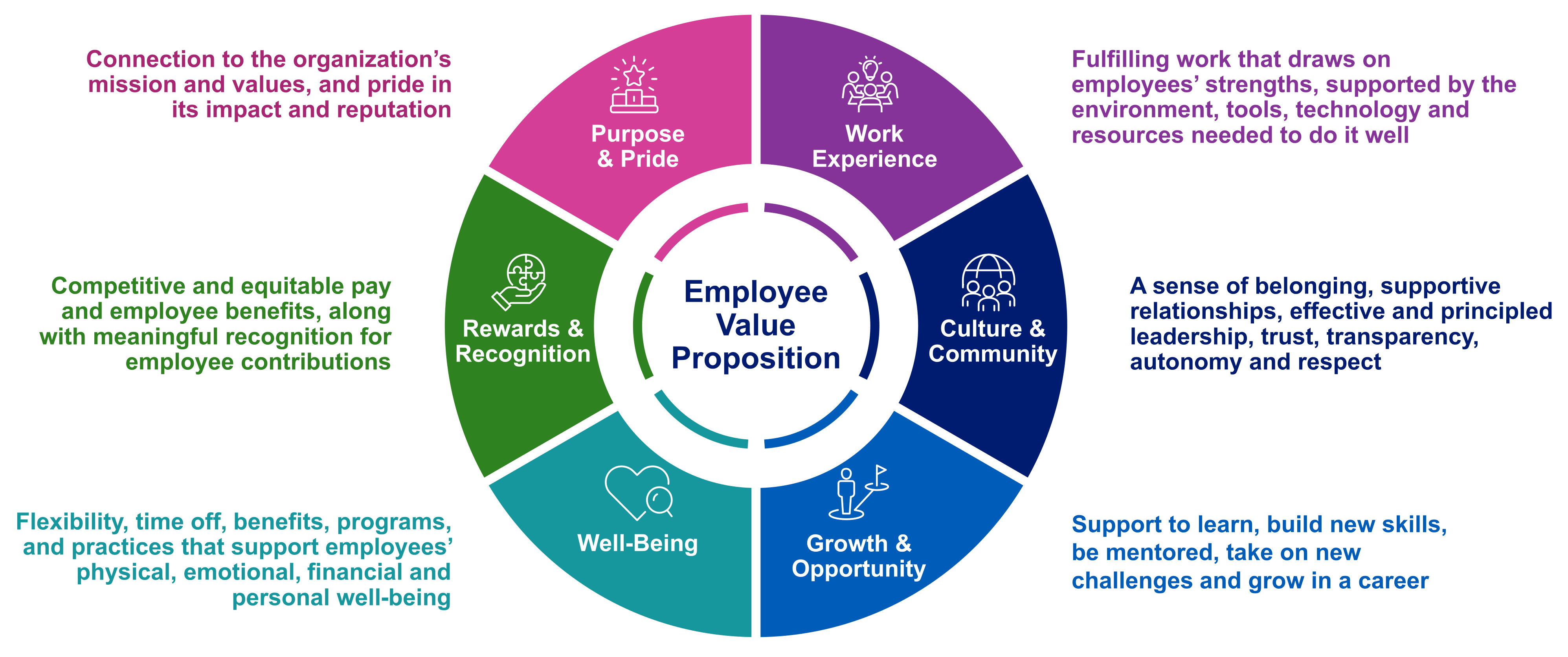
Depending on the organization and its workforce, other dimensions may warrant separate attention, such as job security, organizational stability, location and lifestyle, or opportunities for innovation and impact.
The goal is to identify the aspects of the employment experience that matter most to the people an organization needs to attract and retain.
Once an organization has made its choices, it should capture its EVP in a few clear sentences and share it widely. An EVP only works if people know about it.
When communicating with employees, leaders should regularly connect the EVP to their organization’s mission and strategic priorities. Jobseekers should see the EVP in job postings, on the careers website and in interviews so they can judge whether the organization is the right fit for them.
When employees and jobseekers hear the same story and that story matches what employees actually experience, the EVP is more credible.


This page is for informational purposes only and does not constitute legal, tax or investment advice. You are encouraged to discuss the issues raised here with your legal, tax and other advisors before determining how the issues apply to your specific situations.