
Articles | August 25, 2026
Most leaders recognize their organization needs a strong human resources function. They also know when HR is harder to navigate than it should be.
Hiring takes too long. Managers struggle to address performance concerns. Responses vary depending on who answers the question. Leaders lack the workforce information they need to make decisions. Technology feels clunky. Policies are difficult to interpret.

When these problems arise, don’t assume they reflect the capabilities of the HR team. Sometimes they do. More often, HR’s effectiveness is a reflection of the system in which it operates.
HR teams are being asked to do more than ever before. In addition to delivering reliable workforce services, HR is expected to attract and retain talent, strengthen leadership, improve organizational effectiveness, foster employee engagement, shape workplace culture, ensure compliance and provide leaders with the workforce insights needed to make informed decisions.
Meeting these expectations has become increasingly complex. In many industries, competition for talent remains strong. Employee expectations continue to evolve. Technology is reshaping how work gets done. Leaders need better workforce data to guide decisions. Employees increasingly expect flexibility, competitive pay and benefits, opportunities for growth, capable supervisors and a workplace where they can do meaningful work.
To meet these expectations, recruiting, onboarding, compensation, benefits, employee relations, learning and talent management all need to work well. When they do, HR earns trust and credibility across the organization.
But trust is only part of the equation. HR also needs the capacity, information and influence to advise leaders, improve processes, anticipate workforce needs, use data to guide decisions and connect people decisions to organizational priorities. The strongest HR organizations succeed at both. They deliver excellent service today while helping the organization prepare for tomorrow.
The best HR teams both respond to immediate needs by providing dependable day-to-day service and help leaders think ahead by anticipating workforce challenges, strengthening organizational capability and aligning people strategies with the organization’s long-term priorities.
HR’s ability to fulfill this broader role depends on more than the capabilities of the people within the function. It also depends on whether the organization has the structure, capacity, processes, technology, data, governance and leadership support needed for HR to succeed. Even highly capable HR professionals can struggle when the systems around them create unnecessary barriers.
It’s important to recognize that not every HR team starts from the same place. Some HR teams are already highly effective, well respected and deeply involved in important organizational decisions. Others are doing the best they can under difficult conditions, with fragmented processes, limited capacity, outdated technology or unclear roles. In many cases, the issue is not the talent or commitment of the HR team. It’s whether the system around the team helps or hinders the work.
This is where an HR assessment becomes useful. It helps leaders understand whether the HR function has the conditions it needs to deliver the work the organization now expects.
A good assessment is about understanding how well the HR systems support the organization and the people who depend on it, rather than grading HR or evaluating individual team members. It moves beyond assumptions, anecdotes and isolated frustrations to provide an objective, evidence-based view of what is working well, what is getting in the way and which improvements are likely to matter most.
A comprehensive HR assessment examines how strategy, organizational structure, governance, people, services, processes, technology, data and culture work together to shape HR's effectiveness. Individual functions are not evaluated in isolation.
An HR assessment includes interviews with organizational leaders, HR staff, key partners and those who rely on HR services. It also examines HR structures, roles, processes, technology and data, and culture and communication. Additionally, an HR assessment compares current practices with leading practices and relevant benchmarks.
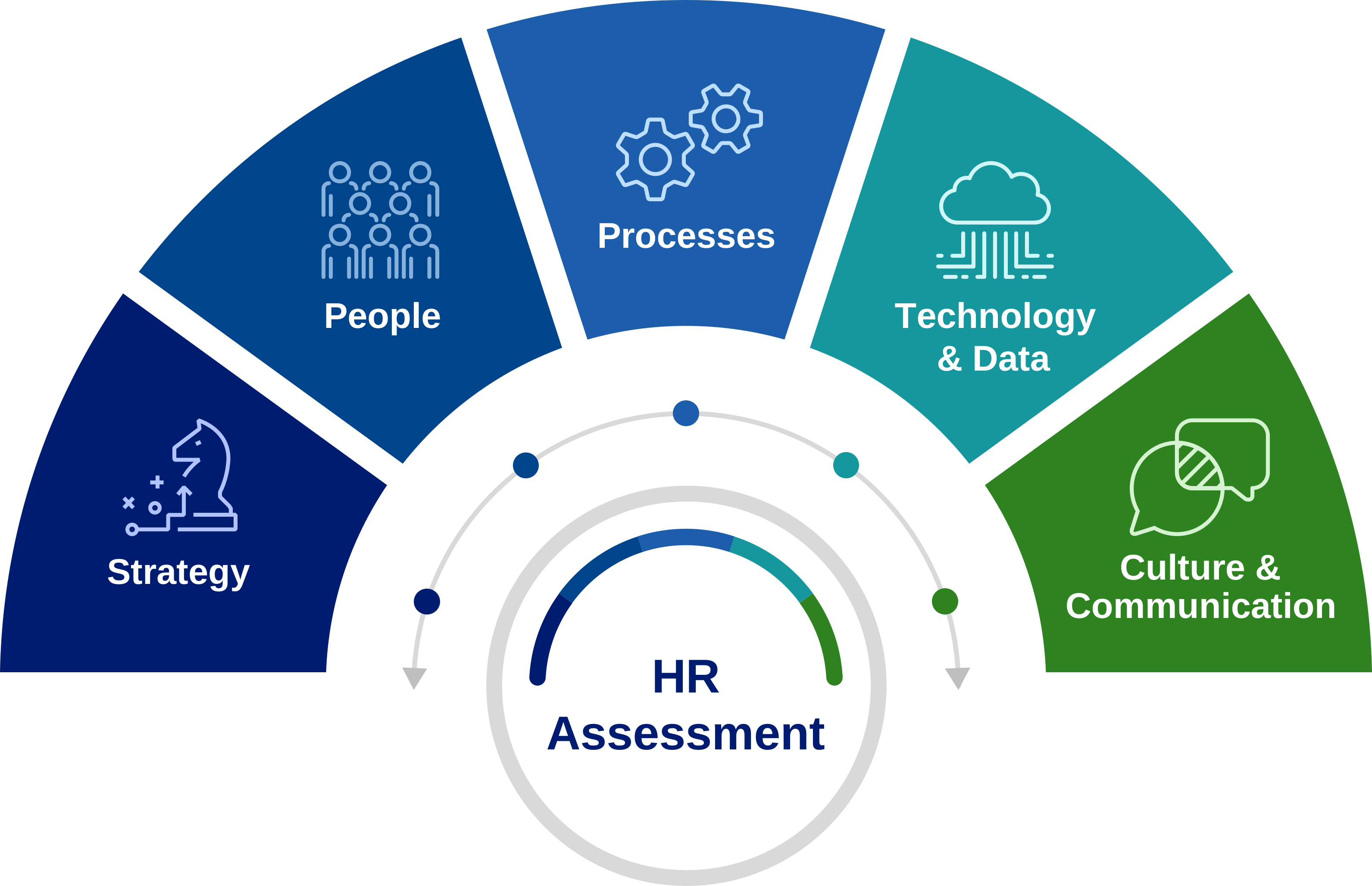
These multiple sources of data make it possible to identify what is working well, where gaps or inefficiencies exist and where changes could have the greatest impact.
The result is a practical set of recommendations and priorities to strengthen HR operations, capabilities and service delivery.
Typically, an HR assessment can be completed within 90 days.
The HR assessment should answer the questions leaders care about most:
Strong HR organizations are built intentionally. They require capable people, but they also depend on clear priorities, thoughtful organizational design, effective processes, reliable technology, meaningful data and sustained leadership support. When those elements work together, HR is better positioned to deliver excellent service, advise leaders, strengthen organizational capability and prepare the organization for the future.
An HR assessment is the starting point. It helps leaders understand whether the system surrounding HR is enabling success and where targeted improvements will make the greatest difference.
The value of an HR assessment is the shared understanding it creates and the informed decisions it enables. A thoughtful assessment helps leaders see beyond individual issues to understand how the HR system is working as a whole. It identifies strengths to build on, barriers to remove and opportunities to improve, providing a practical roadmap for strengthening HR's ability to support the organization's mission and workforce.
Let’s have a conversation about how we can help.
Get in Touch

This page is for informational purposes only and does not constitute legal, tax or investment advice. You are encouraged to discuss the issues raised here with your legal, tax and other advisors before determining how the issues apply to your specific situations.