
Articles | July 1, 2026
Our latest short quarterly insight for sponsors of group health plans focuses on the value of stop-loss insurance as the number and magnitude of high‑cost claims both increase. It covers key statistics on stop-loss insurance and 11 best practices for getting the most out of your stop-loss policy.
It also covers a new proposed rule that is intended to give group health plan sponsors greater flexibility in offering fertility benefits. Comments on the proposed rule are due July 13, 2026.
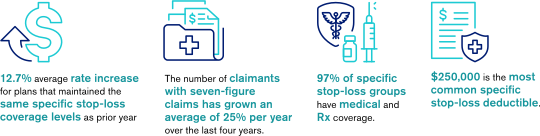
Sources: Segal’s 2026 national medical stop-loss dataset (for the statistics on stop-loss insurance) and SHAPE, Segal’s health data warehouse (for the statistic on million-dollar+ claims).
High‑cost claims (HCCs) are becoming more frequent and severe, putting unprecedented pressure on health plan sponsors’ budgets. Trend drivers, such as specialty drugs, gene and cell therapies, new biologics, higher unit costs and increased utilization, are accelerating overall spend. Claims that once qualified as rare “shock losses” are now recurring events. The rising prevalence of HCCs can quickly destabilize renewals and derail carefully planned budgets — especially for self‑funded plans.
As claims volatility increases, stop-loss insurance plays a critical role in protecting plan sponsors from catastrophic financial exposure. Stop-loss helps cap downside risk by reimbursing claims above defined thresholds, preserving budget predictability and safeguarding cash flow.
However, the value of stop-loss insurance depends heavily on how well it’s structured and managed. A policy should be aligned with a plan sponsor’s risk tolerance and avoid outdated attachment points, limited contract language or poorly aligned coverage, which can leave plan sponsors exposed just when protection is needed most — particularly in periods like now of elevated medical and pharmacy cost trends.
To keep pace with industry changes, plan sponsors should regularly reassess their stop-loss strategy. Best practices include the following:
When treated as a strategic risk‑management tool rather than a commodity purchase, stop-loss coverage can help plan sponsors absorb HCCs without sacrificing long‑term affordability or plan stability.
The Departments of Labor, Health and Human Services, and Treasury recently issued a proposed rule that is intended to give group health plan sponsors greater flexibility in offering fertility benefits.
Plan sponsors should watch for the final rule. Until then, plan sponsors may wish to review their current fertility benefit offerings and consider whether to make any changes in light of the proposed rule.
Sponsors of group health plans can make fertility benefits available through the plan, through a limited excepted benefit arrangement, or both.
Plans that already offer fertility benefits through group health plan coverage may choose to evaluate whether they want to augment that coverage under the group health plan or through a self-funded or insured limited excepted fertility benefit.
While the rule allows flexibility for limited excepted to include a broad range of fertility benefits, they can also be tailored to include specific benefits and can be offered at a lower lifetime amount than the amount in the proposed rule. Plan sponsors can consider what fertility benefit design might best complement benefits already available under the group health plan.
Plan sponsors that decide to offer limited excepted fertility benefits will need to ensure compliance with all aspects of the final rule once it is issued, including the specific notice requirements along with considering implications related to any relevant state laws.
Learn more about the proposed rule in our June 3, 2026 insight.
Contact your Segal consultant or get in touch with us.


This page is for informational purposes only and does not constitute legal, tax or investment advice. You are encouraged to discuss the issues raised here with your legal, tax and other advisors before determining how the issues apply to your specific situations.
