
Reports and Surveys | June 8, 2026
Rate of increase in medical stop-loss premiums has accelerated. For the 225 health plans in Segal’s 2026 national medical stop-loss dataset, the average stop-loss coverage premium increase is 12.7 percent, up from 9.7 percent.
The average is for groups that maintained similar specific stop-loss benefit levels as the prior year.
Among all groups, including those that increased specific stop-loss deductible levels and/or aggregating specific stop-loss deductibles resulting in an overall reduced rate action, the average premium increase is 11.5 percent, up from 7.3 percent.
You’ll learn:
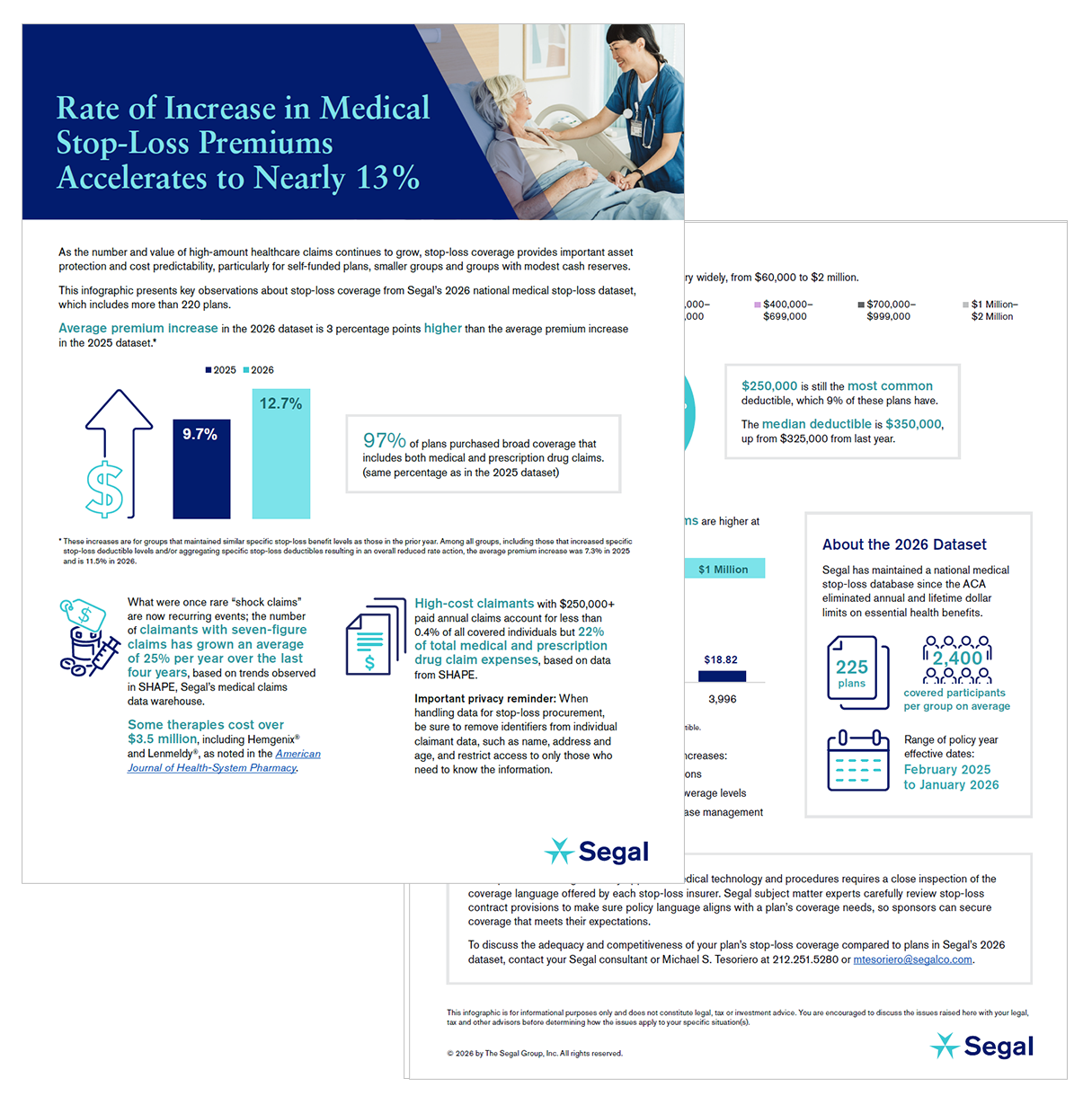
What were once rare “shock claims” are now recurring events. The number of claimants with seven-figure claims has grown an average of 25 percent per year over the last four years, based on trends observed in SHAPE, Segal’s medical claims data warehouse.
As the number and value of high-amount healthcare claims continues to grow, stop-loss coverage provides important asset protection and cost predictability, particularly for self-funded plans, smaller groups and those with modest cash reserves.
The fact that some drug therapies cost more than $3.5 million underscores the value of stop-loss policies that cover prescription drug claims.
The rapid rate of change in newly approved medical technology and procedures requires a close inspection of the coverage language offered by each stop-loss insurer.
Segal subject matter experts carefully review stop-loss contract provisions to make sure policy language aligns with a plan’s coverage needs, so sponsors can secure coverage that meets their expectations.
To discuss the adequacy and competitiveness of your plan’s stop-loss coverage compared to plans in Segal’s 2026 dataset, get in touch.


This page is for informational purposes only and does not constitute legal, tax or investment advice. You are encouraged to discuss the issues raised here with your legal, tax and other advisors before determining how the issues apply to your specific situations.
