
Articles | June 29, 2026
Multiemployer DC annuity fund trustees are tasked with keeping administrative plan fees as low and manageable as possible as part of their fiduciary duty to act in the best interests of participants and beneficiaries. To meet that obligation, trustees should understand how fees correspond to services and vary based on plan size, assets, location, touch points, automation and complexity.

To help trustees of multiemployer DC annuity fund understand the fees they should expect or negotiate for their plans, Segal analyzed the administrative expenses reported by DC annuity funds in Form 5500 filings for 2023 and 2024. When segmenting the data by plan type, geography, plan size and participant size, the data not only showed clear patterns in administrative cost, but provided guidelines to help plan sponsors understand the fees they should expect or negotiate for their plans. In this article, we present our findings and outline seven steps trustees of plans with outdated fee structures can take to lower administrative costs.
Our analysis segmented the data by plan type, geography, plan size and participant size. We found clear patterns in administrative expense. This information provides guidelines trustees can use during negotiations with recordkeepers and third-party administrators.
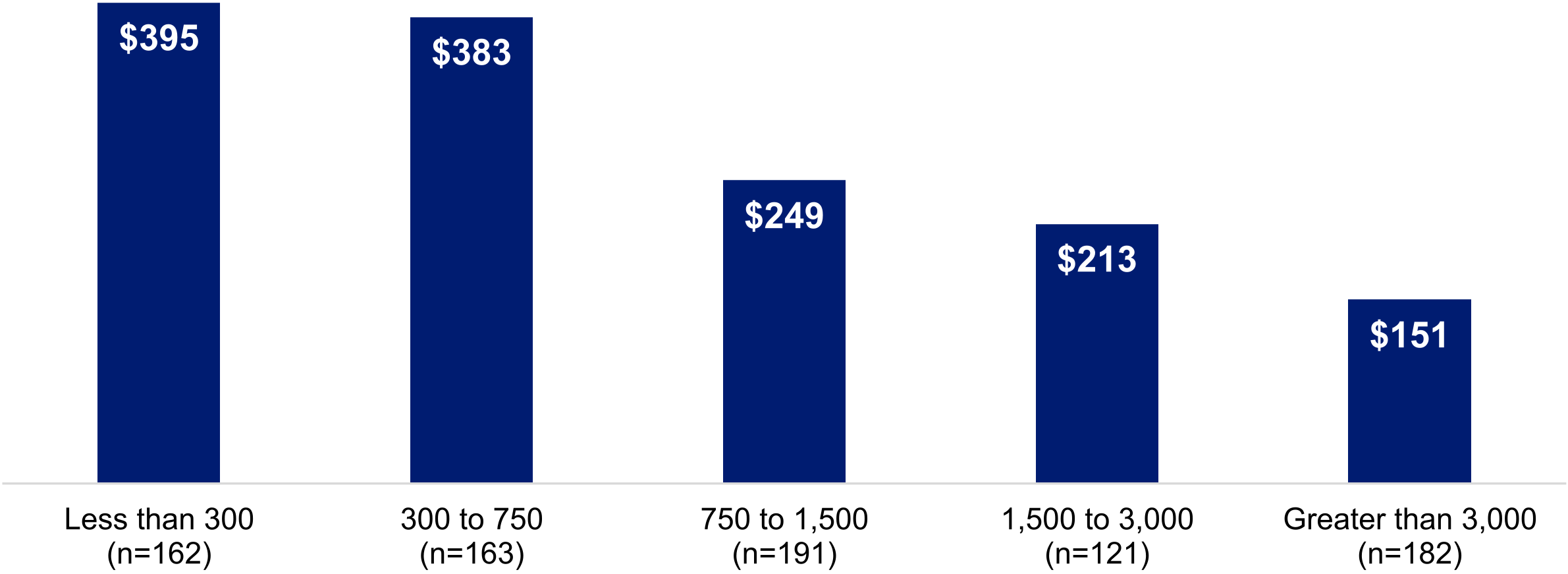
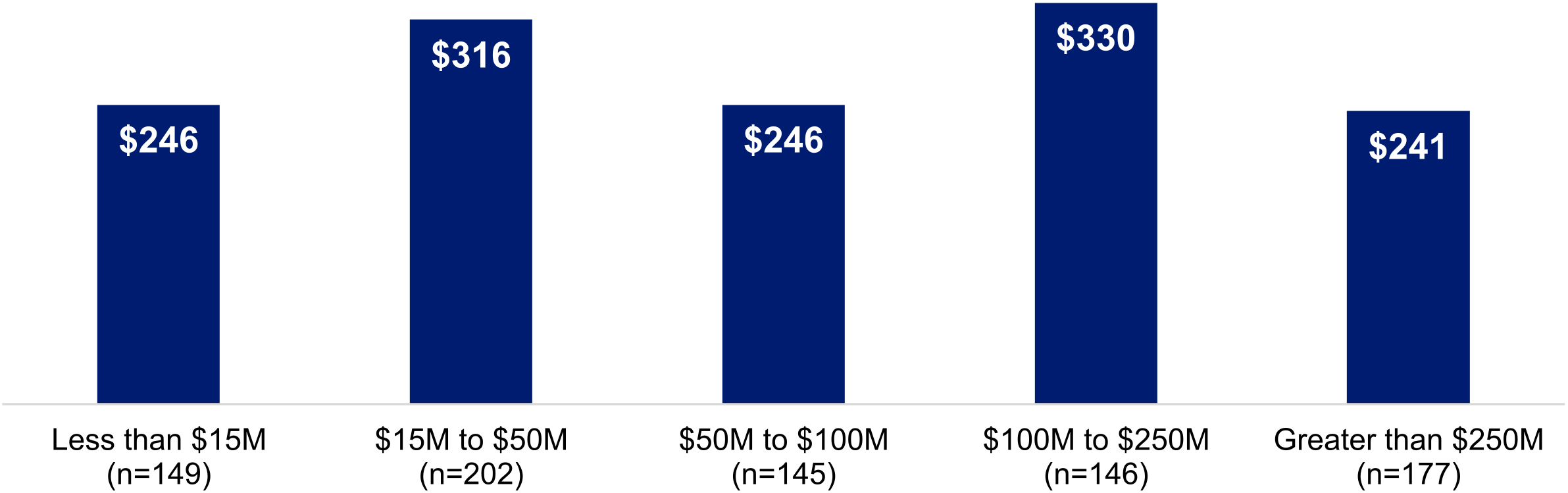
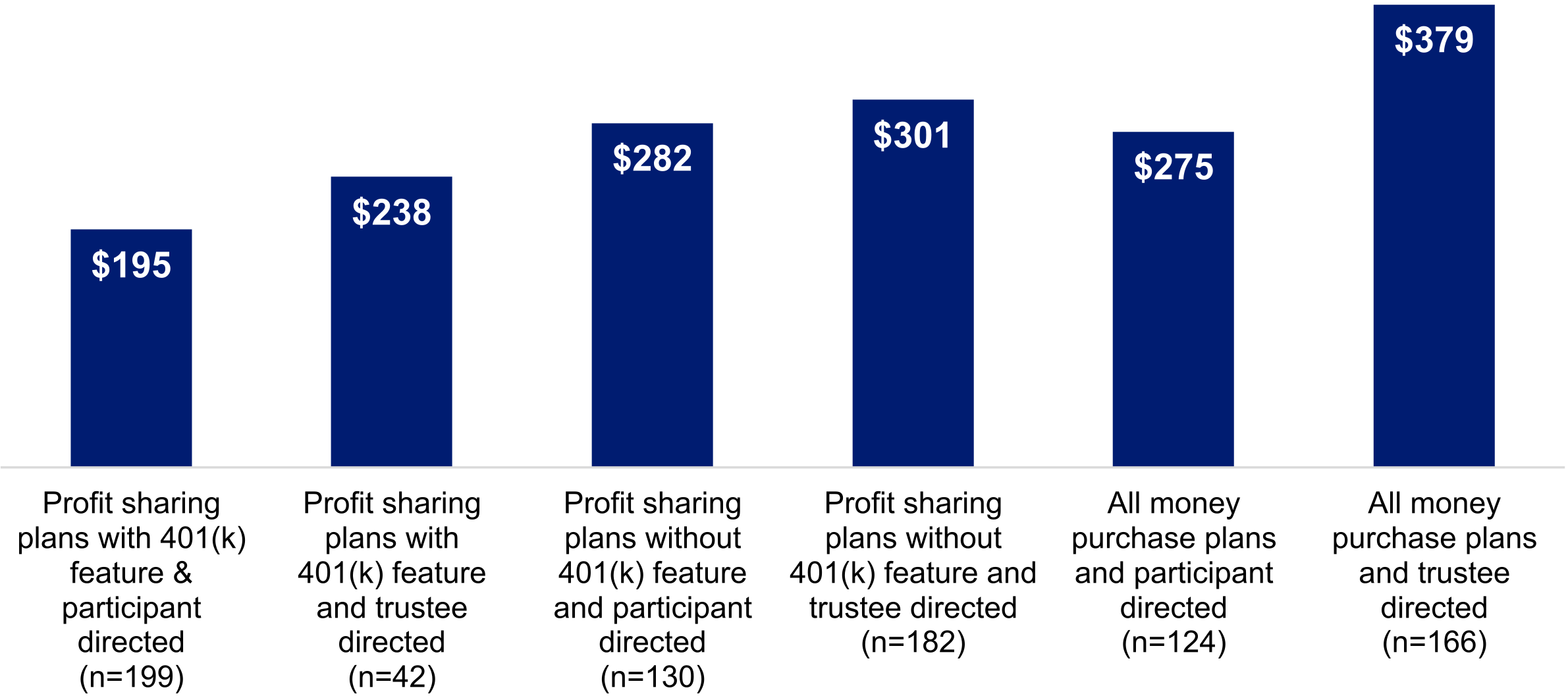
The following graphs illustrate our findings. They include data from all regions, all plan sizes as measured by number of participants and all plan sizes as measured by assets and all plan types.
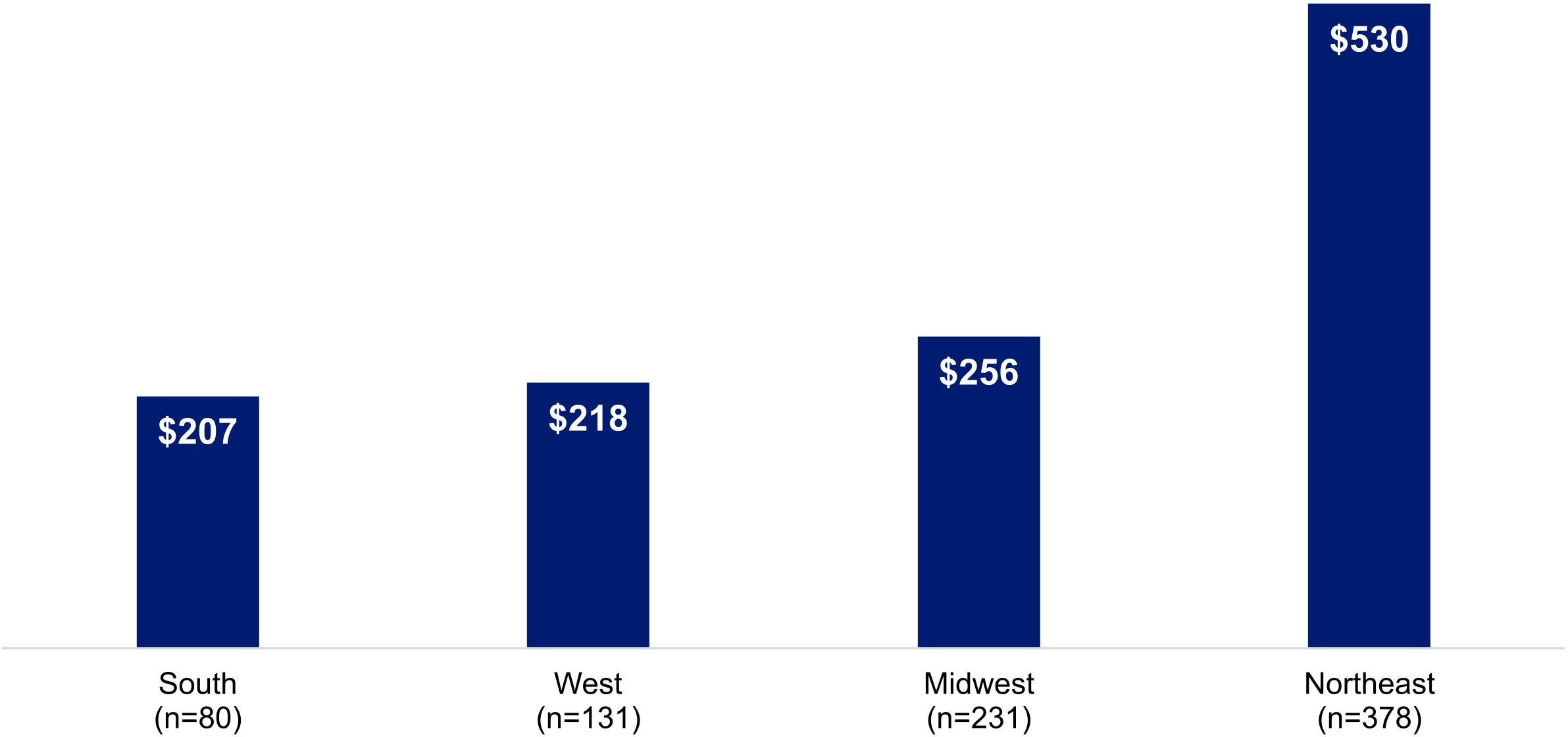
To divide plans into regions, we followed the U.S. Census Bureau’s regions.
Source: Segal’s analysis of multiemployer DC annuity funds’ 2023 and 2024 Forms 5500
These regional differences are a function of local fee markets, average plan size, vendor pricing model of services and operational complexity.
Source: Segal’s analysis of multiemployer DC annuity funds’ 2023 and 2024 Forms 5500
Small funds tend to have significantly higher per-participant administrative expenses, primarily because fixed costs are spread across a smaller participant base. Fee levelization, a method used to ensure that all participants pay an equal, proportional share of the plan’s administrative and recordkeeping costs, is an industry best practice that has gained popularity over time to align with more transparent recordkeeping practices. It is increasingly common for plans of all sizes to spread fees uniformly across all plan participants.
Source: Segal’s analysis of multiemployer DC annuity funds’ 2023 and 2024 Forms 5500
Plans between $50M to $100M in assets begin to recognize expense savings by relying more heavily on recordkeepers. Plans above $100M in assets experience higher expenses due to greater in-house administrative duties. Plans above $250M see the lowest expense per-participant administrative expense because they can take full advantage of economy of scale.
Source: Segal’s analysis of multiemployer DC annuity funds’ 2023 and 2024 Forms 5500
Participant-directed profit-sharing designs tend to have flatter, lower cost curves due to standardized recordkeeping platforms. Trustee-directed and money purchase arrangements typically show wider spreads and higher unit costs because they rely more on investment oversight, multiple managers, custody and advisory services. Additionally, money purchase plans tend to have more complex designs and more involvement needed from recordkeepers due to specific administrative requirements that only apply to the money purchase assets, such as certain withdrawal requirements.
When assessing fees, plan sponsors should also look for transparency in fee arrangements. Fees should be separated by recordkeeping, trust/custody, audit/legal, advisory/consulting and cybersecurity/compliance.
Small- to mid-sized funds can migrate to participant-directed bundled platforms, emphasize relief from annual minimums and adopt standardized platforms. Larger funds should push for volume breakpoints and unit-rate reductions to reflect scale advantages.
For trustee-directed or money purchase designs, consolidation of managers and custodians is a key consideration. To mitigate local cost premiums, also consider cross-region vendor selection.
Regardless of region or size, all plans should periodically assess the market to offset inflation and keep up with the latest trends. Plan sponsors can accomplish this with small market checks through a request for information (RFI) or a full-scale request for proposals (RFP), which may uncover hidden services or gaps as well as enhance fiduciary protection. Without regular benchmarking, plans are exposed to stale rates and complex fee structures.
To lower administrative costs, plans can take the following steps:
After establishing fee structures, trustees should review them annually for potential changes. The steps to rebid or renegotiate, simplify fund lineup and automate key operational areas are revolving processes that are never permanent. Fiduciaries have a responsibility to continually monitor fee levels and regularly take action to ensure their plans’ fees are in line with the industry. These responsibilities are grounded in ERISA, which emphasizes that process and prudence — not results alone — are most important when evaluating whether fiduciaries have met their obligations. Part of these responsibilities includes ensuring that administrative fees (both from third-party recordkeepers and internal trustee administration) are kept as low and manageable as possible.
In an ever-evolving landscape of annuity fund administration, oversight remains critical to fulfill fiduciary obligations.
Going forward, multiemployer annuity plans will need to carefully evaluate the barriers they face to achieve lower administrative expenses, particularly for smaller and mid-size funds that face vendor minimums and fixed-cost pressures, or the increased cost of self-administration. This, coupled with the shrinking of the DC recordkeeping industry, will make it even more challenging for plans to negotiate for lower fee levels.
Participant-directed platforms and bundled service models may continue to compress per-participant costs. Regional dispersion will likely persist given structural cost differences, unless offset by cross-region sourcing or market shifts. Governance complexity premiums in trustee-directed and money purchase structures will remain. Trustees can address them explicitly via lineup simplification and manager consolidation.
Trustees who understand how administrative fees vary — by region, participant size, asset size and plan design — are well positioned to evaluate reasonableness, fulfill their fiduciary obligations and negotiate effectively in an increasingly constrained market.
To ensure fees remain as low as possible, ongoing oversight is important.


This page is for informational purposes only and does not constitute legal, tax or investment advice. You are encouraged to discuss the issues raised here with your legal, tax and other advisors before determining how the issues apply to your specific situations.