
Articles | June 18, 2026
Access to affordable and reliable mental healthcare remains a critical challenge. Nearly 40 percent of Americans live in areas without enough mental health professionals to meet demand for care. Vendors have sought to address persistent shortages in access to mental healthcare by creating large networks of mental health providers.
Plan sponsors that are considering offering a large behavioral health network should note that its effectiveness will depend more on thoughtful design, governance and deployment than on the size of the network.

This article describes large behavioral health networks and their appeal. It also covers things to consider before choosing a large behavioral health network. Additionally, it outlines four steps that plan sponsors can follow to ensure the successful introduction of a large behavioral health network.
Typically, behavioral health networks are composed of independent contractors. Network vendors’ recent strategy for expanding access is to stitch together multiple subcontractors. The intent is to bridge gaps in a current network, such as in specialty areas, like pediatrics and substance use disorders (SUDs).
What began as an effort to increase the availability of in-network mental health professionals has morphed into a confusing hodgepodge of therapists, apps and subcontractors that vendors described as comprehensive networks.
There are several ways plan sponsors can contract with large behavioral health networks. Major insurance companies offer them. There are also companies that specialize in offering large networks — often referred to as standalone vendors — that operate independently of insurance companies. In certain cases, some plan sponsors create their own custom behavioral health networks. This approach typically works best for plans seeking to fill an identified gap in their networks, such as pediatrics.
Vendors of custom behavioral health networks usually provide carve-out services offered in tandem with separately administered medical and surgical benefits. Specialty mental health/SUD administrators may offer the network, provide utilization management services or do both.
They present several distinct advantages:
The benefits of a custom network include enhanced access, high-quality specialty care and care navigation provided by experienced MH/SUD experts.
There are several disadvantages to consider:
The Employee Benefits Security Administration conducted “secret shopper” calls to several thousand outpatient mental health providers listed as available to accept new patients. Dishearteningly, many were unreachable or did not return the calls, and less than 30 percent had an appointment available within a month. This means a participant might have to contact multiple prospective mental health providers before finding one with an acceptable wait time.
The challenges of a custom network include cost and coordination of overall services and communications, as well as compliance with the Mental Health Parity and Addiction Equity Act (MHPAEA).
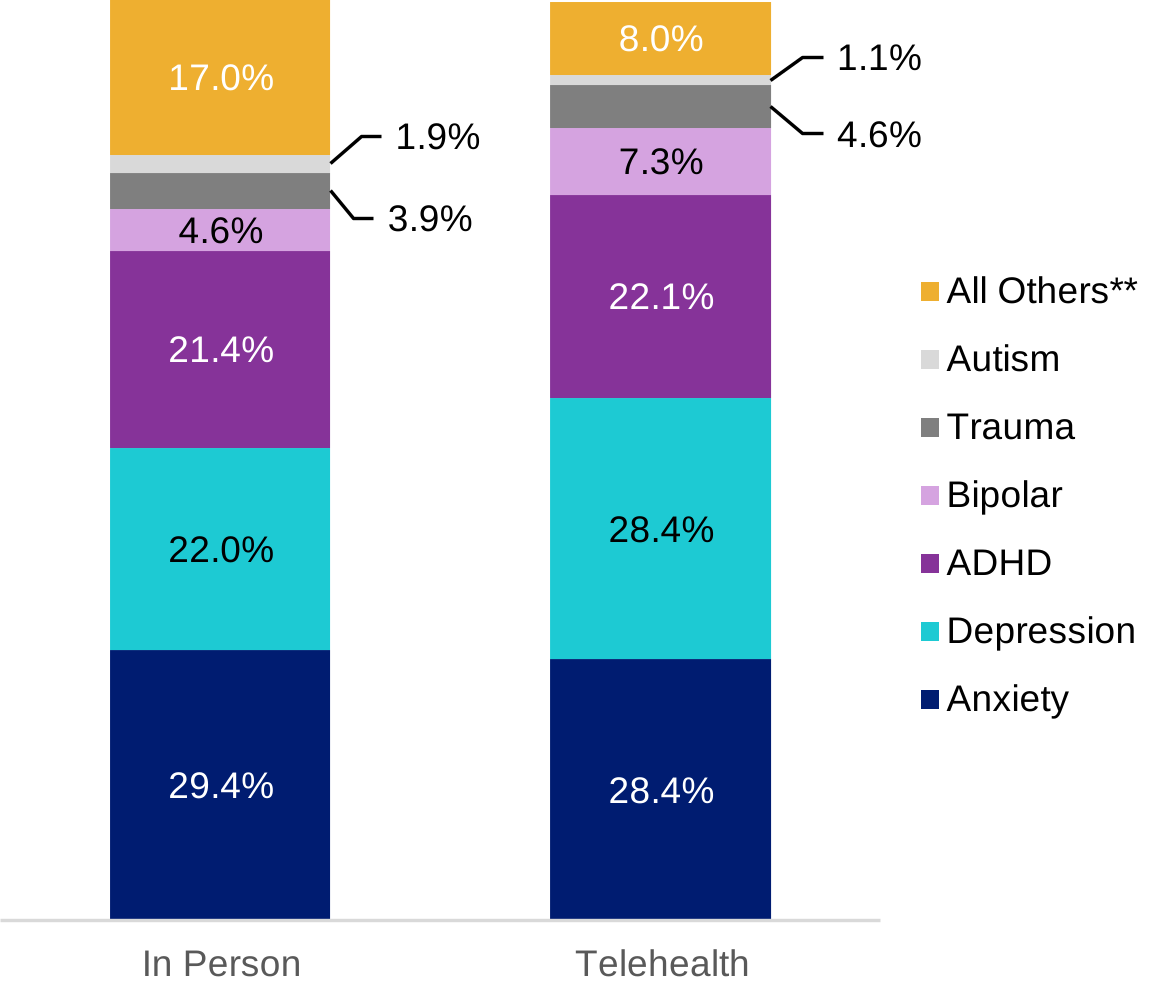
* Totals does not equal 100 percent due to rounding.
** “All others” includes obsessive-compulsive disorder, schizophrenia, eating disorders and neurodevelopmental disorders.
Source: Segal’s SHAPE health data warehouse
Plan sponsors should follow four steps to ensure the introduction or ongoing support of a large behavioral health network is successful.
To determine network adequacy, an accurate metric is the number of providers that have a verified appointment available within 10 days. If the network vendor being considered does not report wait times until the next available appointment, consider requesting that metric.
A small network that can prove timely availability is more useful to a participant than a bloated network that either cannot measure or cannot confirm availability. This is true as long as in-person care is available in locations in which plan participants live.
Knowing what your population demographics are and what behavioral health benefits your people need is an important foundation for this step. I describe six best practices for designing effective behavioral health benefits in my recent article, “Tailoring Behavioral Health Services for Your Population.”
Care navigation connects the participant — and, in some cases, the family — to the appropriate services based on their clinical needs. Ideally, this is facilitated by nurses or social workers who specialize in mental health and SUDs. For a patient who is overwhelmed by their treatment needs, it removes the burden of navigating the healthcare system on their own.
Care navigation may be provided either through the network vendor, a behavioral health point solution or a general clinical care navigation vendor. While care navigation is beneficial for all types of conditions, it is especially valuable for mental health, given the complexity of the networks compounding the challenge of understanding appropriate levels of care for a person’s unique needs. Care navigators can bridge the gap between platforms and create a cohesive plan of care out of disjointed networks.
Considering the two-year trends by place of service shown in the next graph, it is preferable to see higher utilization of less-acute levels of care, such as telehealth and outpatient claims costs, compared to inpatient and residential treatment, which indicates participants are receiving care before their conditions deteriorate. However, emergency room (ER) costs for mental health conditions have increased at an uncomfortable pace. This is why care navigation is so vital: care navigators can prevent inappropriate ER utilization by participants who cannot arrange more appropriate levels of care without assistance.
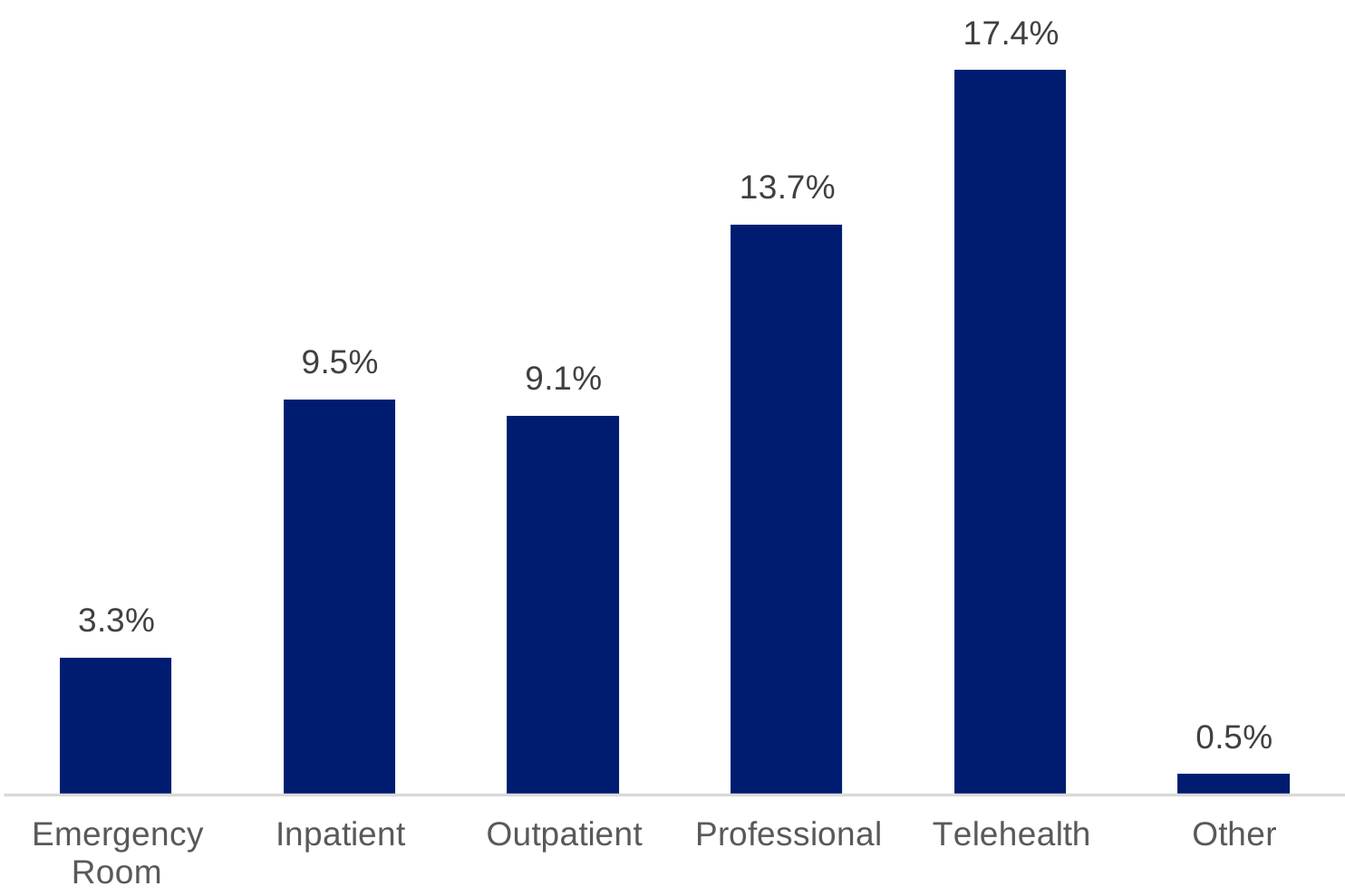
Source: Segal’s SHAPE health data warehouse
Ask the network carrier to describe what data it will routinely provide on utilization and clinical outcomes. Even if data is not collected from all platforms within the network, persist in getting the separate reports, when available, and reviewing them for next steps.
These reports may reveal surprising participant utilization patterns, such as utilization of various platforms by age group, that may suggest how to improve the benefit. For instance, if a high percentage of participants are seeking care for stress, it may be helpful to offer them access to credibly written articles, podcasts and meditations.
Mental health benefits will still be lacking without careful deployment that appeals to participants’ interests while dispelling stigma that may prevent use. The true measure of a mental health program is whether it actually helps members feel supported, understood and able to access care when they need it.
Ask yourself these five questions:
✓ Are leaders and other influential people in the organization continually speaking in support of the mental health benefit?
✓ Do the logistics of using the benefit give people “permission” to use them (e.g., available outside of working hours)?
✓ Do participants feel the benefit is intended to improve their lives and can be seen as an acknowledgement that their unique mental health needs are a priority for the plan sponsor?
✓ Do promotional communications remain visible, and are they frequent, so people are aware the benefits are available, just when they need support?
✓ If cost and social factors are a perceived barrier to access, how are you addressing this?
As a consultant, I witnessed two clients roll out the exact same vendor program. The first client provided perfunctory support for the program once it was available to participants; all the communications materials from the vendor were used as recommended. The second client intentionally deployed the benefit to appeal to the unique audience, including promoting it with various types of communications (including high-traffic areas visible to participants), mentioning it during meetings and showing that leadership and other influential people support and use the program. The first client’s program garnered about one-third to one-half of the utilization of the second client’s program. Multichannel communications plus visible buy-in from leaders and managers helped drive awareness and normalize use of the behavioral health benefits.
To learn more about how to drive meaningful use of behavioral health benefits, check out my article, “Tailoring Behavioral Health Services for Your Population.”
We're ready to help.
Contact UsSee all of our insights on mental health issues.


This page is for informational purposes only and does not constitute legal, tax or investment advice. You are encouraged to discuss the issues raised here with your legal, tax and other advisors before determining how the issues apply to your specific situations.